On this page
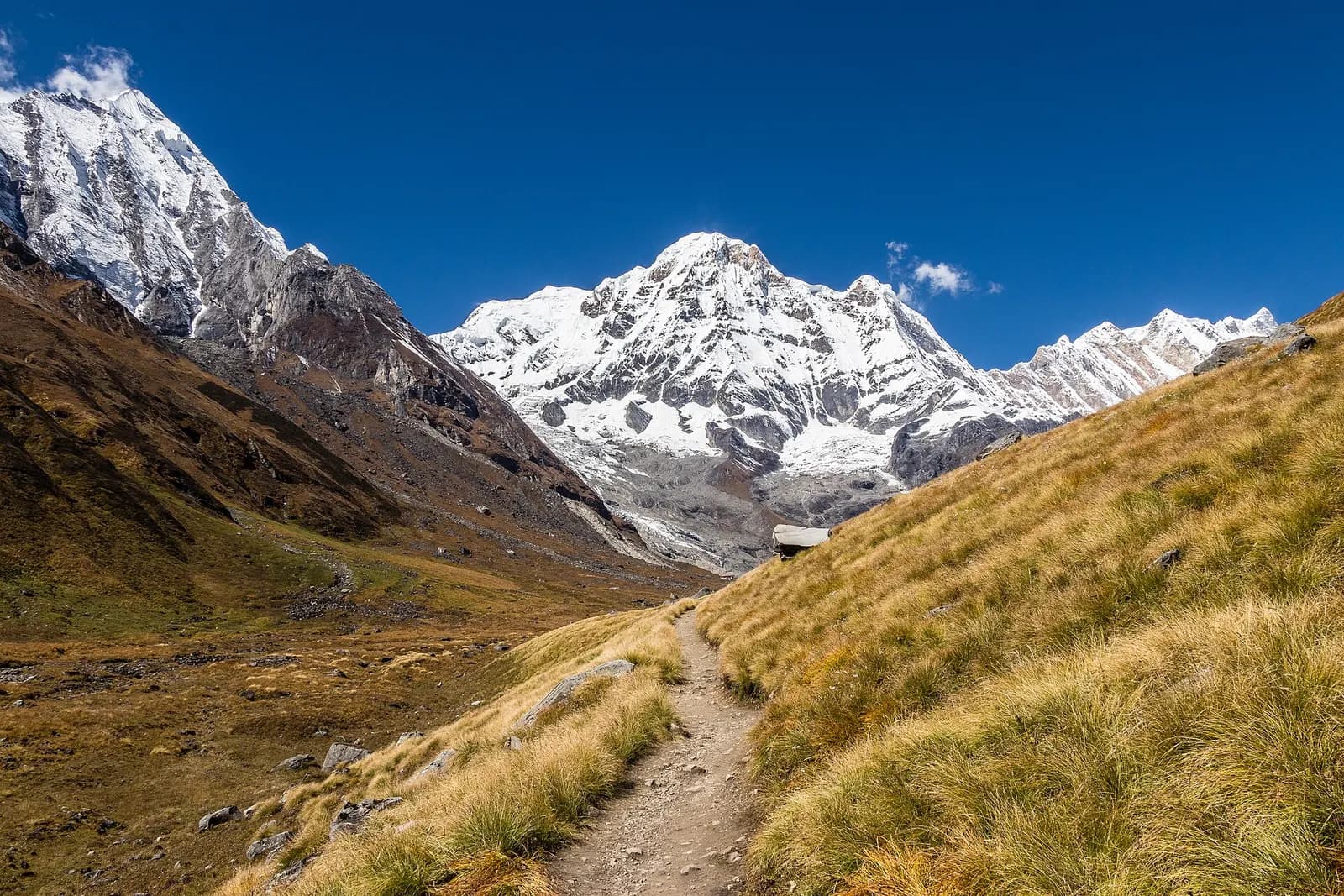
The Annapurna Base Camp trek, usually shortened to ABC, takes you into a ring of 7,000 and 8,000 metre peaks called the Annapurna Sanctuary. In about a week you walk from rice terraces and Gurung villages, through bamboo and rhododendron forest, to a glacier basin at 4,130 m with Annapurna I (8,091 m) straight in front of you.
It is one of the most popular treks in Nepal because it fits a short holiday, starts close to Pokhara and gives you a big Himalayan view without the long flight and higher altitude of the Everest Base Camp trek. This guide covers the route, a sample itinerary, difficulty, permits, cost and the best time to go.
Annapurna Base Camp trek at a glance
| Trek facts | |
|---|---|
| Start and finish | Pokhara (820 m) |
| Highest point | Annapurna Base Camp, 4,130 m |
| Walking days | 7 to 9 (from 5 by jeep to Siwai) |
| Walking per day | 5 to 7 hours |
| Accommodation | Teahouses the whole way |
| Permits | ACAP permit and TIMS card |
| Guide | Licensed guide required |
| Best months | October–November, March–May |
The route into the Annapurna Sanctuary
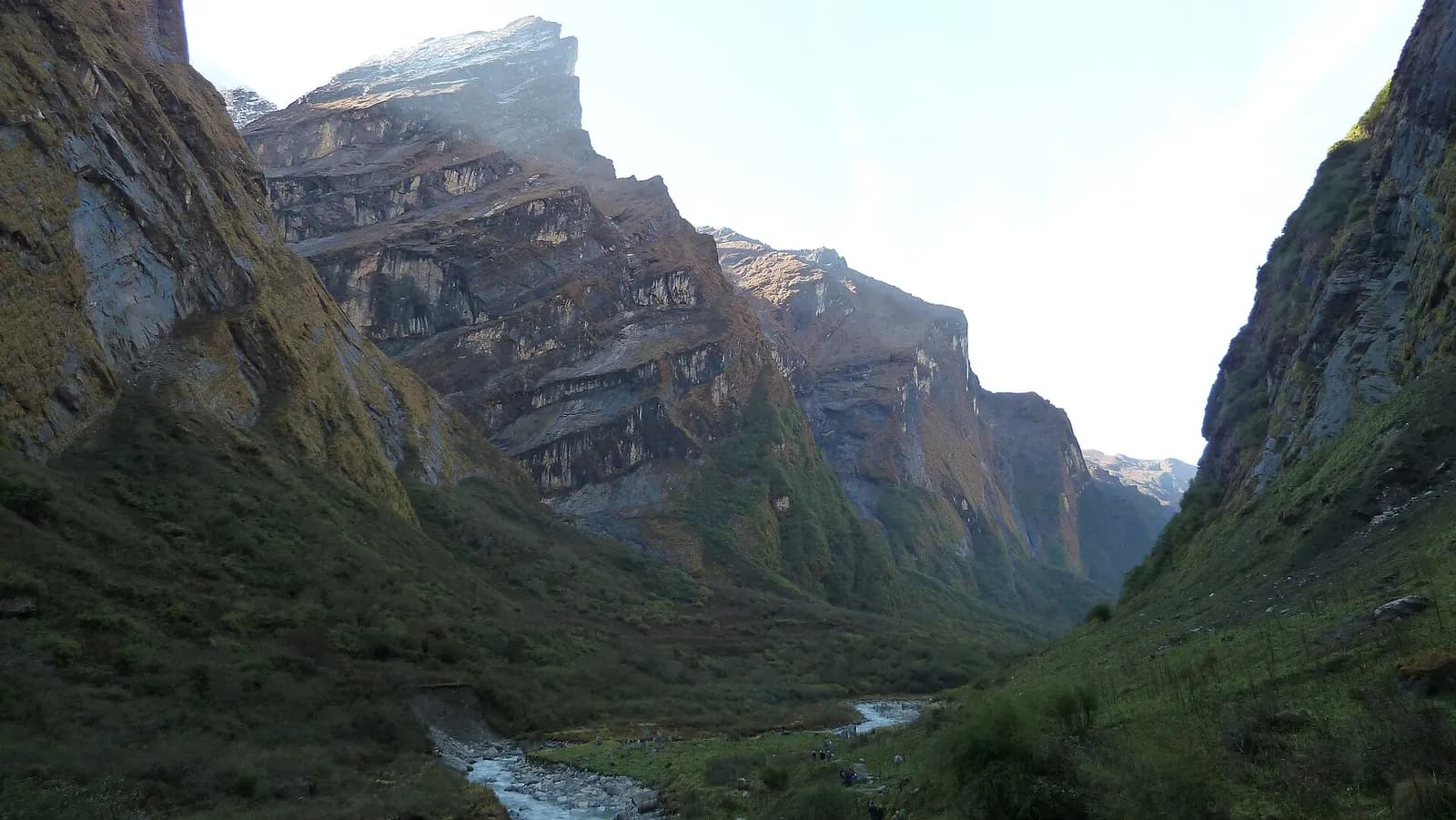
Every ABC trek follows the Modi Khola valley north from the village of Chhomrong. What changes between itineraries is how you get to Chhomrong.
- Via Ghandruk. The classic start. Drive from Pokhara to Nayapul or Kimche and walk up to Ghandruk, a large Gurung village with stone houses and views of Annapurna South and Machhapuchhre.
- Via Siwai or Jhinu. The short start. A jeep road now reaches Siwai and the hot-spring village of Jhinu Danda, which cuts a day off the trek.
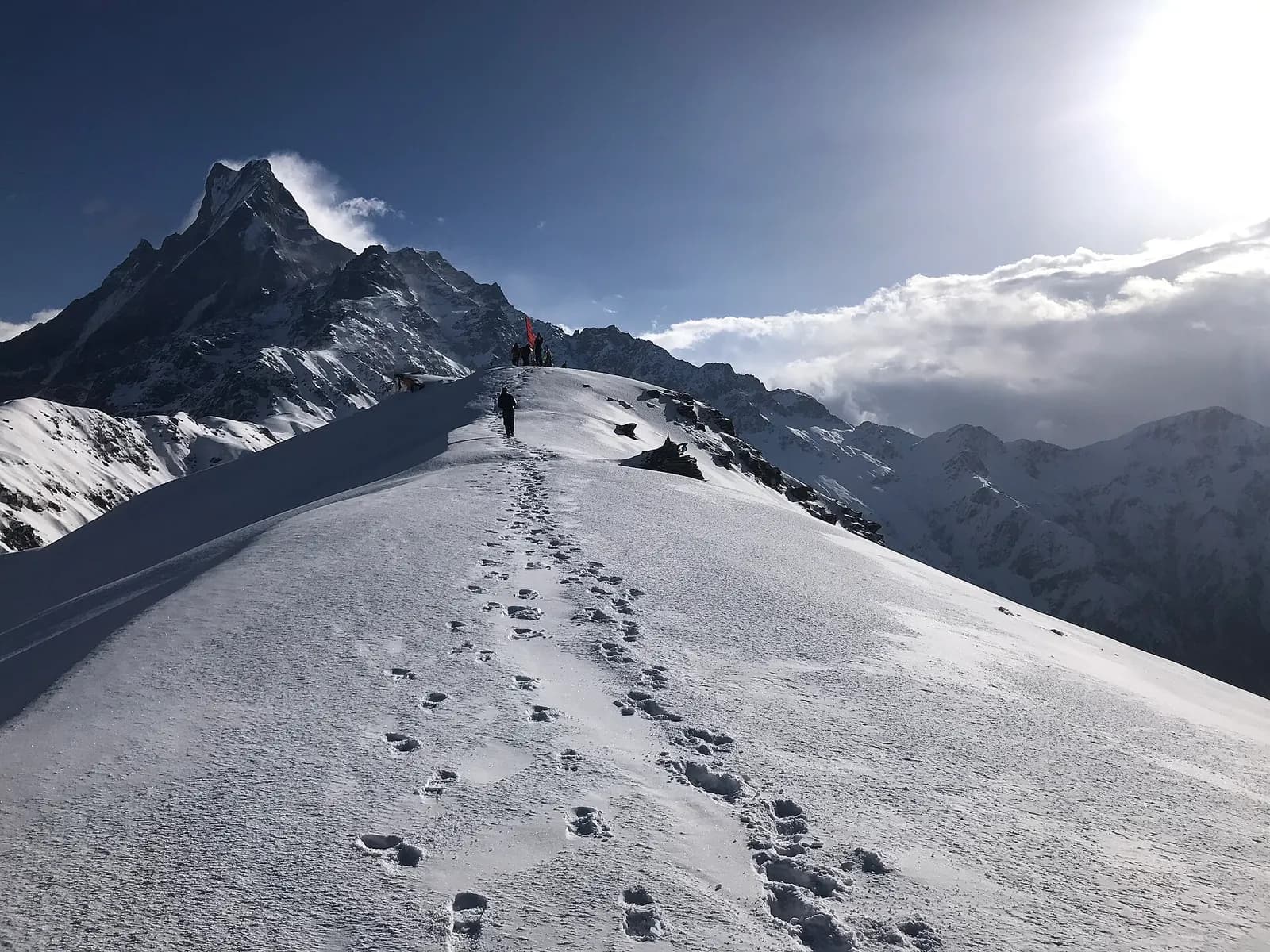
- Via Poon Hill. The long start. Walk the Poon Hill loop through Ghorepani and Tadapani first, then join the ABC trail at Chhomrong. Add two days.
From Chhomrong (2,170 m) the trail drops to the Chhomrong Khola, climbs to Sinuwa, then follows the river through Bamboo (2,310 m), Dovan (2,600 m) and Himalaya (2,920 m) to Deurali (3,230 m). Above Deurali the valley opens out. You pass Machhapuchhre Base Camp, known as MBC (3,700 m), and climb the last gentle slope to Annapurna Base Camp.
On the way down, most groups retrace the route to Bamboo, then branch off at Chhomrong to soak in the hot springs at Jhinu Danda before driving back to Pokhara.
Sample 9-day ABC itinerary from Pokhara
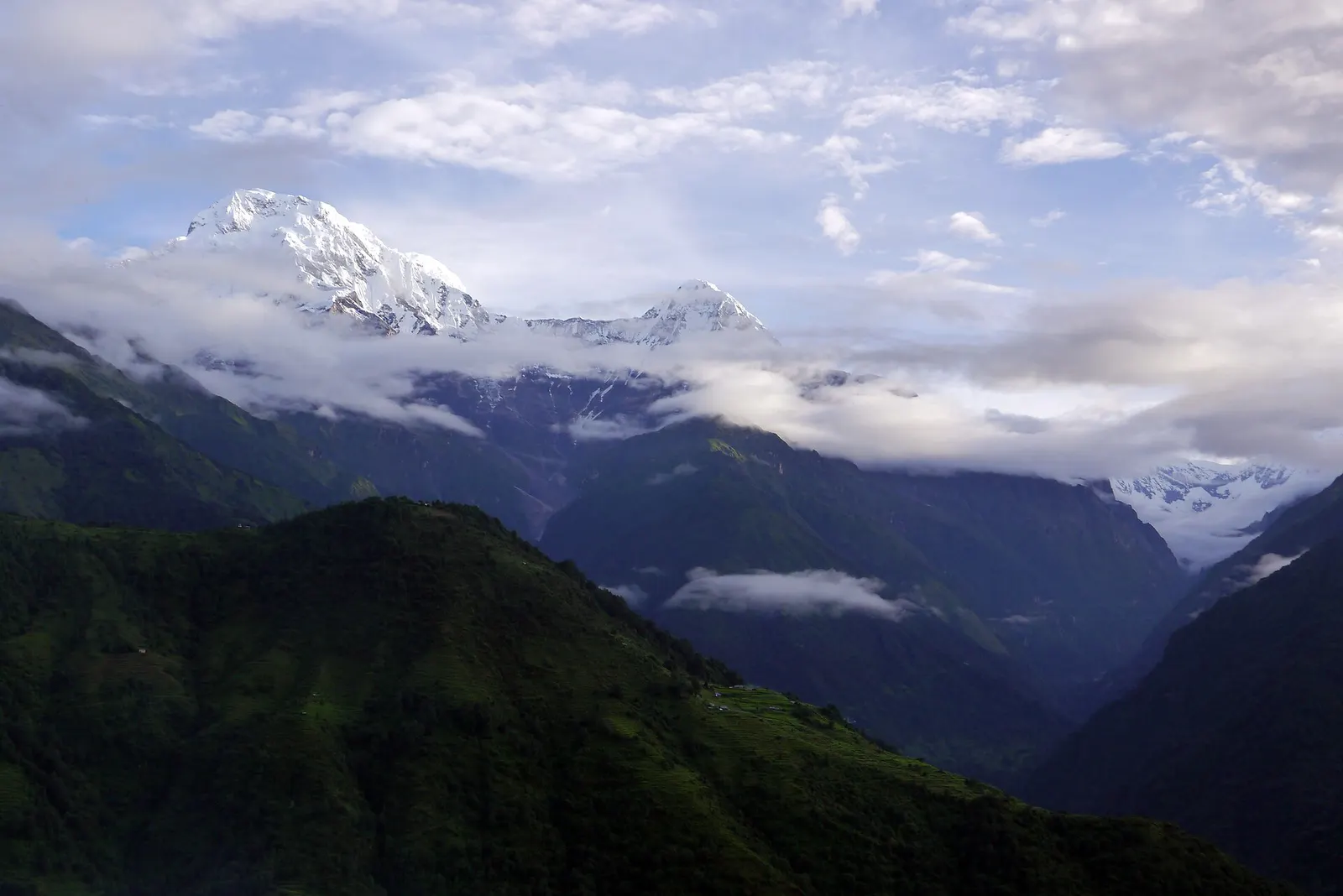
This is a comfortable pace for most first-time trekkers. Your operator may shorten it with a jeep transfer or lengthen it with Poon Hill.
| Day | Route | Sleep at | Walking |
|---|---|---|---|
| 1 | Drive Pokhara to Nayapul, walk to Ghandruk | 1,940 m | 4–5 hrs |
| 2 | Ghandruk to Chhomrong | 2,170 m | 5–6 hrs |
| 3 | Chhomrong to Bamboo | 2,310 m | 5 hrs |
| 4 | Bamboo to Deurali | 3,230 m | 5–6 hrs |
| 5 | Deurali to Annapurna Base Camp via MBC | 4,130 m | 4–5 hrs |
| 6 | Sunrise at ABC, walk down to Bamboo | 2,310 m | 6–7 hrs |
| 7 | Bamboo to Jhinu Danda, hot springs | 1,780 m | 5–6 hrs |
| 8 | Jhinu to Siwai, drive to Pokhara | 820 m | 2–3 hrs |
| 9 | Spare day for weather or rest in Pokhara | 820 m | — |
The spare day matters. Rain, snow or a stomach bug can cost you a day, and it is far better to have that day in your plan than to rush the climb from Deurali to base camp.
How hard is the ABC trek?
ABC is rated moderate. You don’t need climbing skills or previous trekking experience, but you do need to be comfortable walking 5 to 7 hours a day for a week.
The hardest part is not the altitude, it is the stairs. The trail between Chhomrong, the Chhomrong Khola and Sinuwa is made of thousands of stone steps, and you walk them twice, on the way in and on the way out. Trekking poles help a lot on the descents.
The second challenge is altitude. You gain about 900 metres in a single day from Deurali to base camp, and some people feel headaches or poor sleep at ABC. Most itineraries spend just one night there, which keeps the risk low. If you feel unwell at MBC, stay there for the night instead of pushing on. The sunrise from MBC is almost as good.
How to train for it
- Walk or hike 2 to 3 times a week for two months before you go, including some long days with a daypack.
- Use stairs, hills or a step machine to prepare your legs for the stone steps.
- Break in your boots on at least a few long walks before the trek.
Permits for Annapurna Base Camp
You need two documents for the ABC trek:
- ACAP permit (Annapurna Conservation Area Project): NPR 3,000 for foreign nationals and NPR 1,000 for SAARC nationals.
- TIMS card (Trekkers’ Information Management System), issued through your registered trekking agency.
Since April 2023, foreign trekkers must also walk with a licensed guide in Nepal’s conservation areas, so independent trekking to ABC is no longer allowed. Read our Nepal trekking permits guide for the full rules. Permits are checked at Birethanti or Ghandruk and again at Chhomrong, so keep them in your daypack.
How much does the ABC trek cost?
A guided package is the simplest way to budget, because it bundles the parts that are hard to price on your own. A typical package includes:
- Transport between Pokhara and the trailhead
- ACAP permit and TIMS card
- A licensed guide, and a porter if you choose one
- Teahouse rooms and three meals a day on the trail
What is usually not included: your international flights, the bus or flight from Kathmandu to Pokhara, hotels in Pokhara, travel insurance, drinks, snacks, hot showers, battery charging and Wi-Fi on the trail, and tips for your guide and porter.
Prices for food and extras go up the higher you climb, because everything above Chhomrong is carried in on foot or by mule. A plate of dal bhat that costs little in Pokhara can cost three times as much at base camp. Carry enough Nepali rupees in small notes for the whole trek, since there are no ATMs past Ghandruk.
Compare packages on the Annapurna Base Camp trek page to see current prices, what each operator includes and their reviews.
Teahouses and food on the trail
The ABC trail has teahouses all the way to base camp. Rooms are simple twin rooms with a bed, a mattress, a pillow and a blanket. Toilets and showers are usually shared. Bring a warm sleeping bag rated to around -10 °C, because the rooms at Deurali, MBC and ABC are not heated.
Above Chhomrong, the number of teahouses in each settlement is limited by the conservation area, so rooms can fill up in October and November. This is one reason to book through an operator who reserves rooms ahead.
Dal bhat (rice, lentil soup, vegetable curry and pickle) is the trekker’s staple, and refills are free. Menus also offer noodles, momos, fried rice, pasta, porridge and pancakes. Meat is generally not served above Chhomrong, because the Sanctuary is considered sacred, so plan on a few days of vegetarian meals.
Best time to do the Annapurna Base Camp trek
| Season | Months | What to expect |
|---|---|---|
| Autumn | October–November | Clear skies, stable weather, the busiest season |
| Winter | December–February | Cold nights, fewer trekkers, avalanche risk above Deurali after heavy snow |
| Spring | March–May | Warmer days, rhododendrons in flower, more afternoon cloud |
| Monsoon | June–September | Rain, leeches and cloud, but green and quiet |
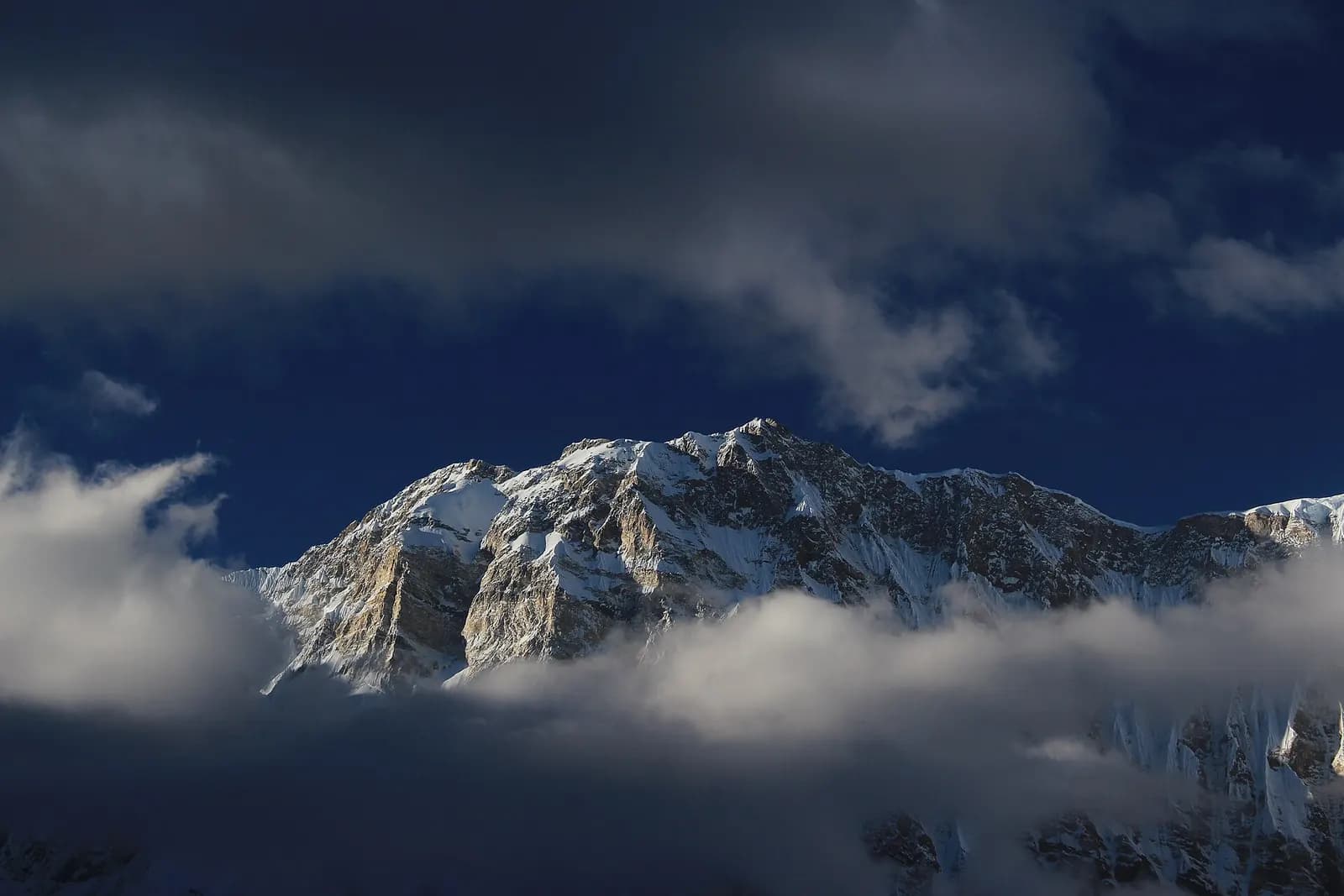
October and November are the best months for mountain views. Spring is a close second, especially April, when the forest between Ghorepani and Chhomrong turns red and pink with rhododendrons.
In winter and early spring, the stretch between Deurali and MBC can be exposed to avalanches after heavy snowfall. Guides check conditions at Deurali every morning and will wait or turn back if the trail is unsafe. See our guide to the best time to visit Nepal for a month-by-month view.
Packing list for ABC
- Broken-in waterproof hiking boots and camp shoes
- Down jacket, fleece and a waterproof shell
- Thermal base layers for the nights above 3,000 m
- Warm hat, gloves and a buff
- Sleeping bag rated to around -10 °C
- Trekking poles for the stone steps
- Headlamp, sunglasses and high-SPF sunscreen
- Water bottle and purification tablets or a filter
- Basic first-aid kit, including blister plasters and any personal medicine
If you hire a porter, they will carry your main bag, usually up to 10 to 12 kg, and you walk with a daypack.
ABC or Mardi Himal?
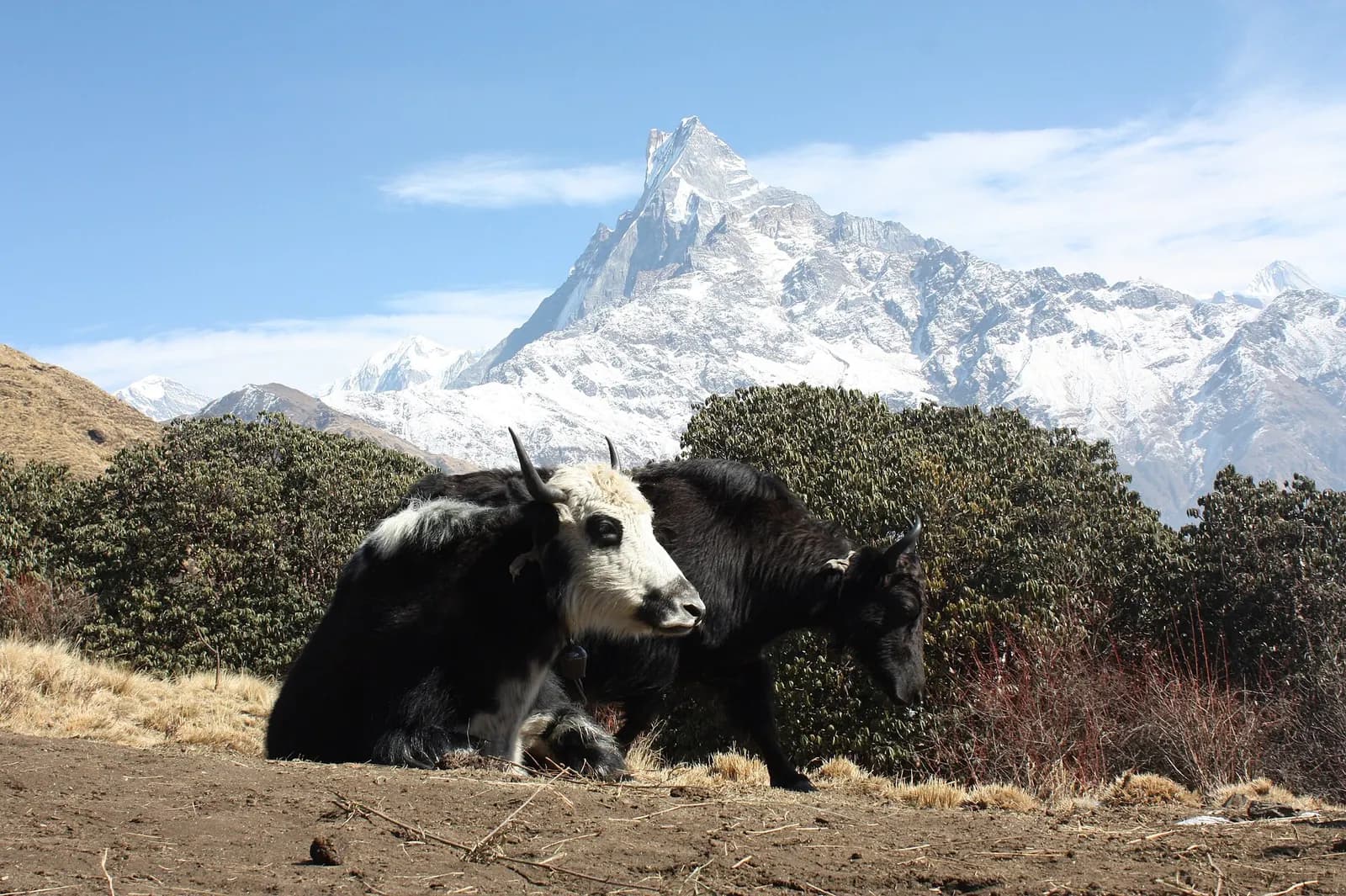
If you have 5 days or less, or you want a quieter trail, look at the Mardi Himal trek. It starts from the same area near Pokhara and climbs a ridge with close views of Machhapuchhre. ABC takes longer but rewards you with the full 360-degree view from inside the Sanctuary, which no other short trek in Nepal can match.
Plan your trek
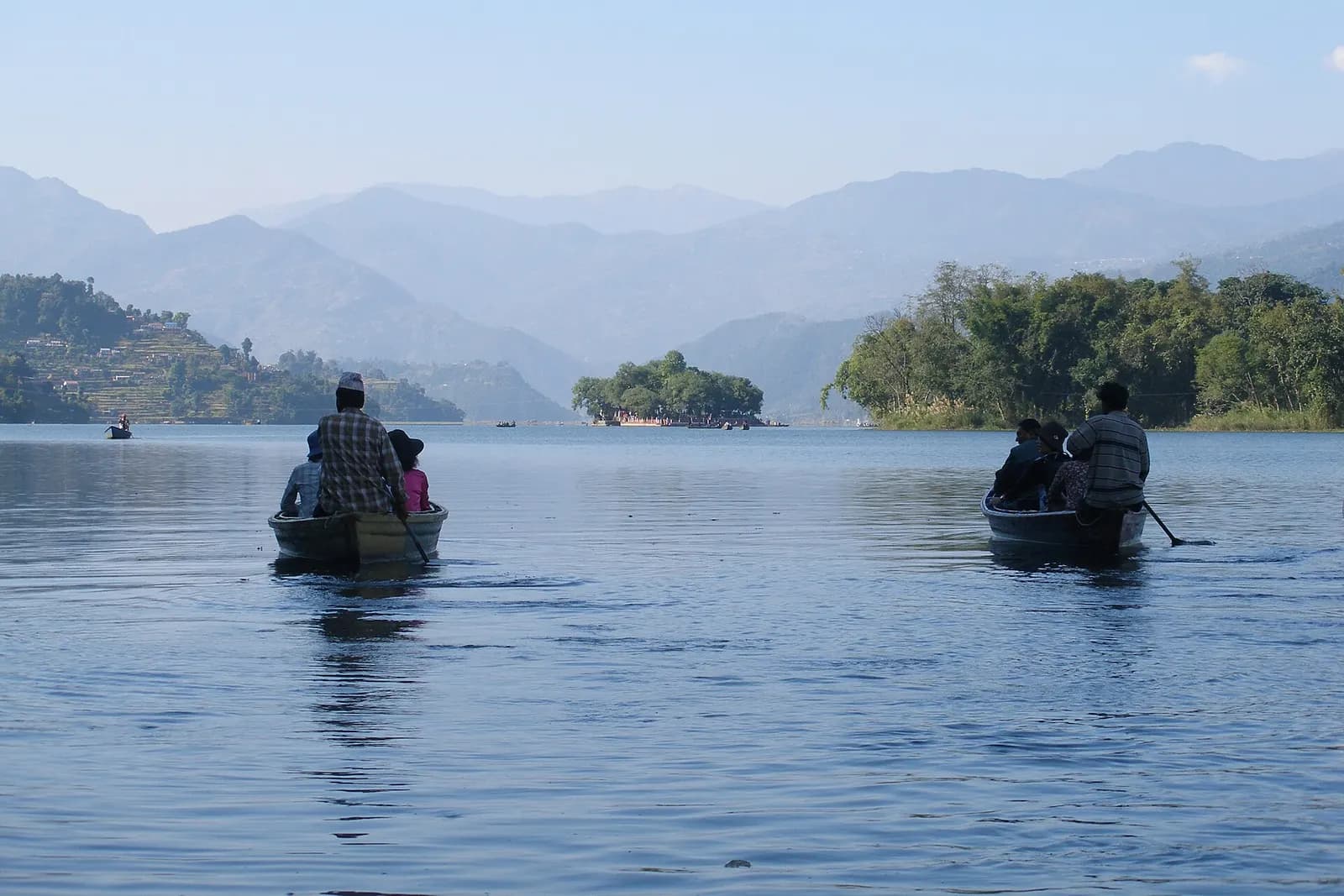
Base yourself in Pokhara a day before and a day after the trek. It gives you time to meet your guide, buy last-minute gear in Lakeside and recover with a boat ride on Phewa Lake. Our things to do in Pokhara guide has ideas for your spare days, and Kathmandu to Pokhara explains how to get there.
Frequently asked questions
How many days do you need for the Annapurna Base Camp trek?
Most people take 7 to 9 walking days from Pokhara. Starting by jeep from Siwai or Jhinu saves a day, and adding Poon Hill at the start makes it 10 to 11 days.
Is the Annapurna Base Camp trek hard?
It is a moderate trek. There are no technical sections, but the stone staircases around Chhomrong and Sinuwa are long, and you finish above 4,000 m. A reasonable level of fitness and a few months of regular walking are enough for most people.
Do I need a guide for Annapurna Base Camp?
Yes. Foreign trekkers in Nepal’s conservation areas must walk with a licensed guide, and ABC is inside the Annapurna Conservation Area. Your operator also arranges the ACAP permit and TIMS card.
Can I get altitude sickness at Annapurna Base Camp?
It is possible. Base camp is at 4,130 m and most itineraries climb from about 2,300 m to 4,130 m in two days. Walk slowly, drink plenty of water and tell your guide early if you have a headache that doesn’t go away.
What is the best month for the ABC trek?
October and November give the clearest mountain views. March to May is the second-best window, with warmer days and rhododendrons in flower.
Pasang has guided in the Everest and Annapurna regions for 14 years and trains new guides for Himalayan Footprints Treks.