On this page
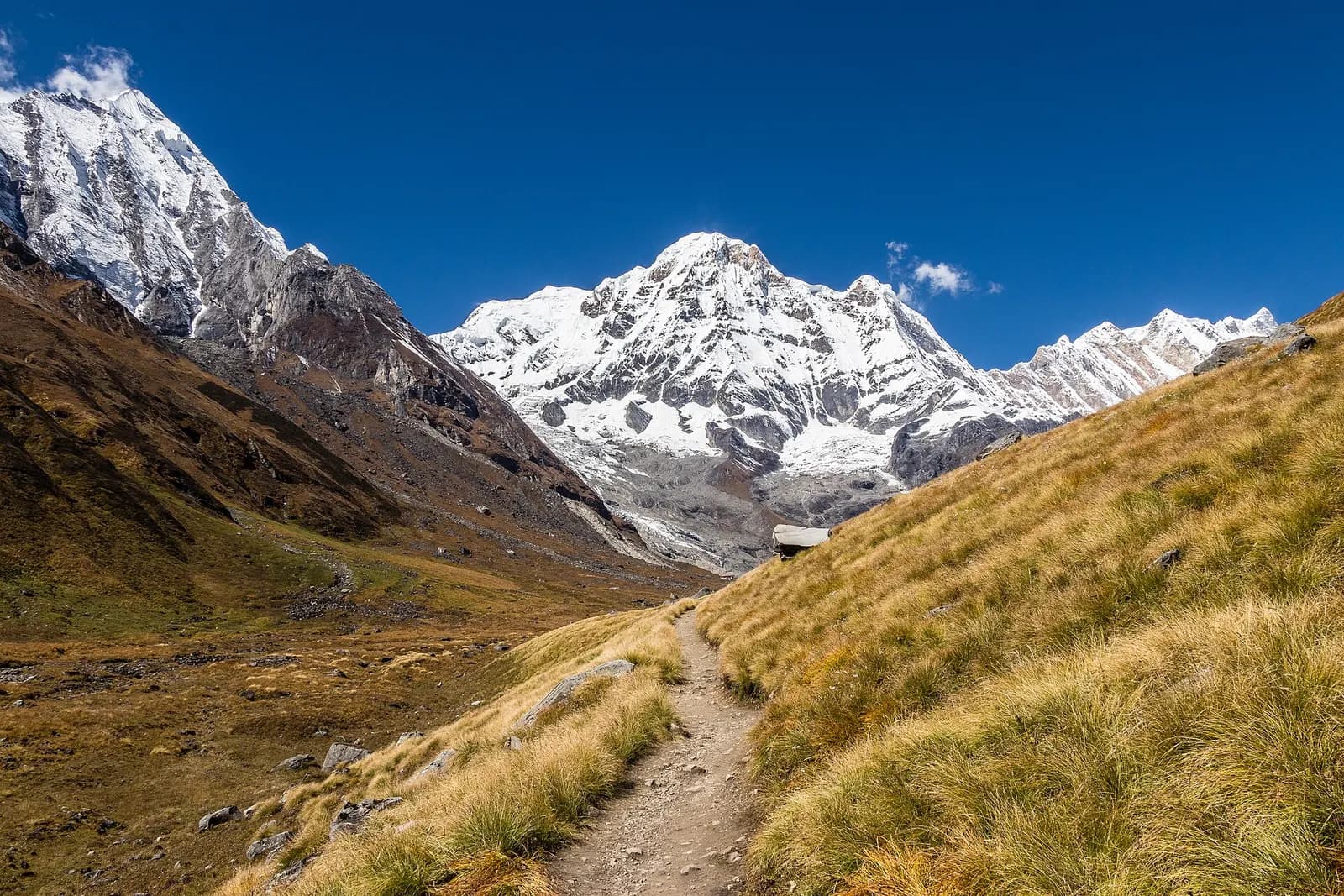
The Mardi Himal trek is the best short trek near Pokhara for big mountain views. Instead of following a valley, the trail climbs a long grassy ridge that points straight at Machhapuchhre (6,993 m), the sacred “Fishtail” peak that has never been officially climbed. In 5 days you go from Pokhara’s lakeside to a viewpoint at 4,200 m, with Annapurna South, Hiunchuli and Mardi Himal filling the skyline.
The route only opened to trekkers in 2012, so it is quieter than the Annapurna Base Camp and Poon Hill trails. This guide covers the itinerary, how hard it is, permits, teahouses, the best time to go and what to pack.
Mardi Himal trek at a glance
| Trek facts | |
|---|---|
| Start and finish | Pokhara (820 m) |
| Highest point | Mardi Himal Base Camp, 4,500 m |
| Main viewpoint | Upper Viewpoint, about 4,200 m |
| Walking days | 4 to 6 |
| Walking per day | 4 to 7 hours |
| Accommodation | Teahouses |
| Permits | ACAP permit and TIMS card |
| Best months | October–November, March–May |
Where the trail goes
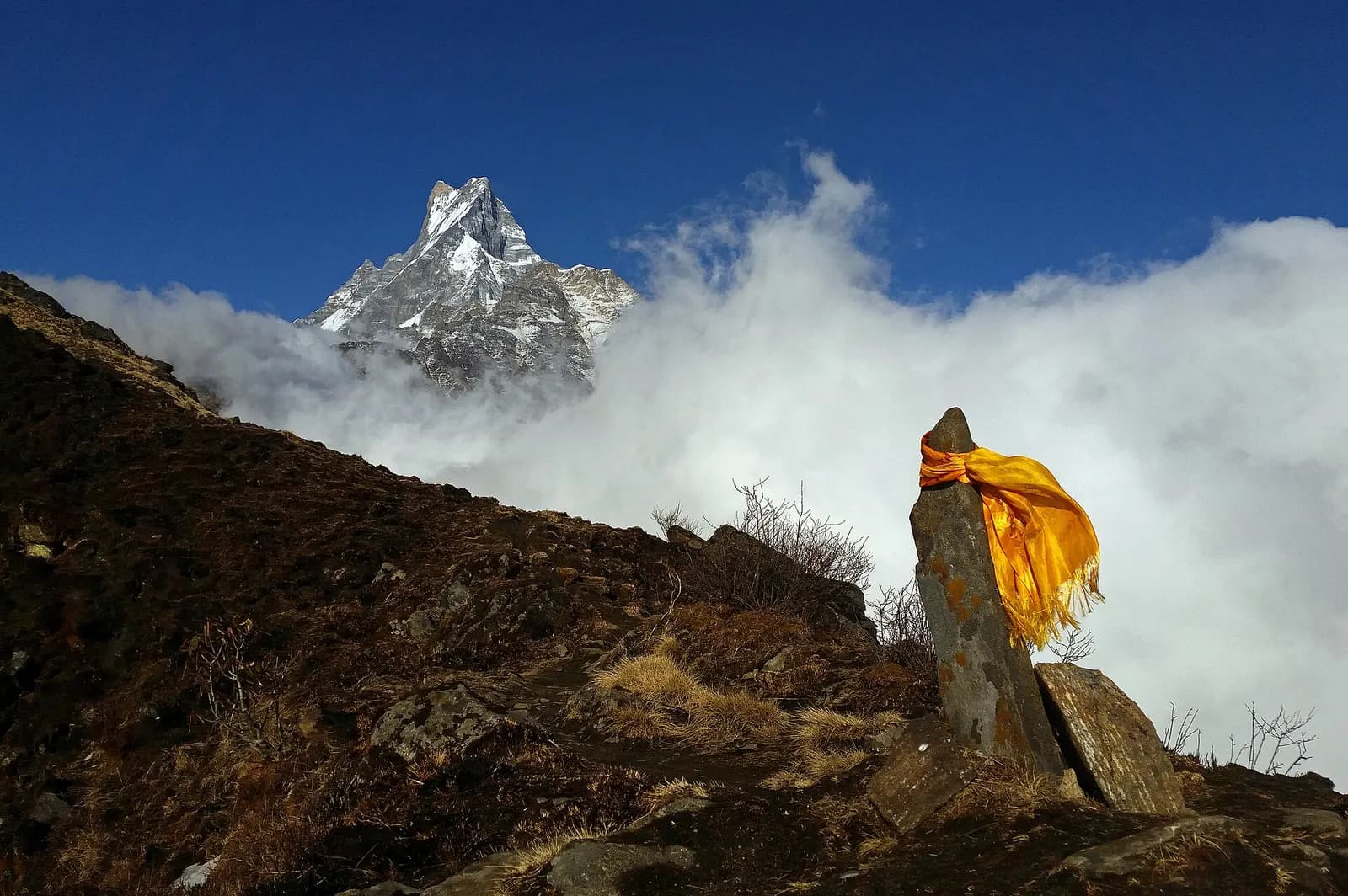
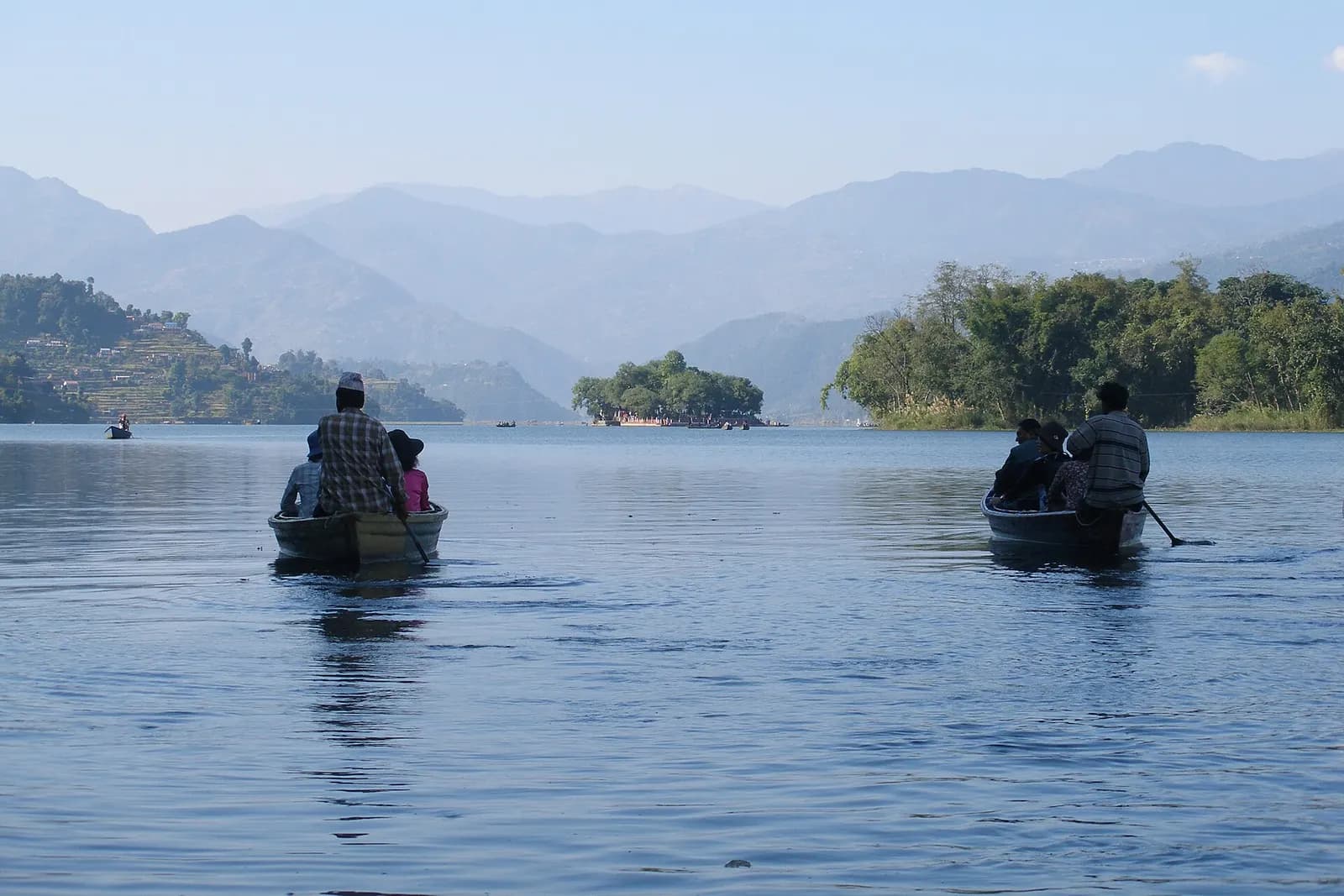
The trek starts at Kande or Phedi, about an hour’s drive from Pokhara, and climbs through rhododendron forest to Forest Camp, Low Camp and High Camp. From High Camp at 3,580 m an early start takes you up the ridge for sunrise over Machhapuchhre, then on to Mardi Himal Base Camp if the weather holds.
On the way down, most groups leave the ridge at Low Camp or Badal Danda and descend to the village of Siding, where a jeep takes you back to Pokhara. Others return via Landruk, a Gurung village with views across the valley to Ghandruk.
Sample 5-day Mardi Himal itinerary
| Day | Route | Sleep at | Walking |
|---|---|---|---|
| 1 | Drive Pokhara to Kande, walk via Australian Camp to Pitam Deurali | 2,100 m | 3–4 hrs |
| 2 | Pitam Deurali to Forest Camp | 2,600 m | 5–6 hrs |
| 3 | Forest Camp to High Camp via Low Camp and Badal Danda | 3,580 m | 5–6 hrs |
| 4 | Sunrise at the Upper Viewpoint, optional Base Camp, back to Low Camp | 2,990 m | 7–9 hrs |
| 5 | Low Camp to Siding, drive to Pokhara | 820 m | 4–5 hrs |
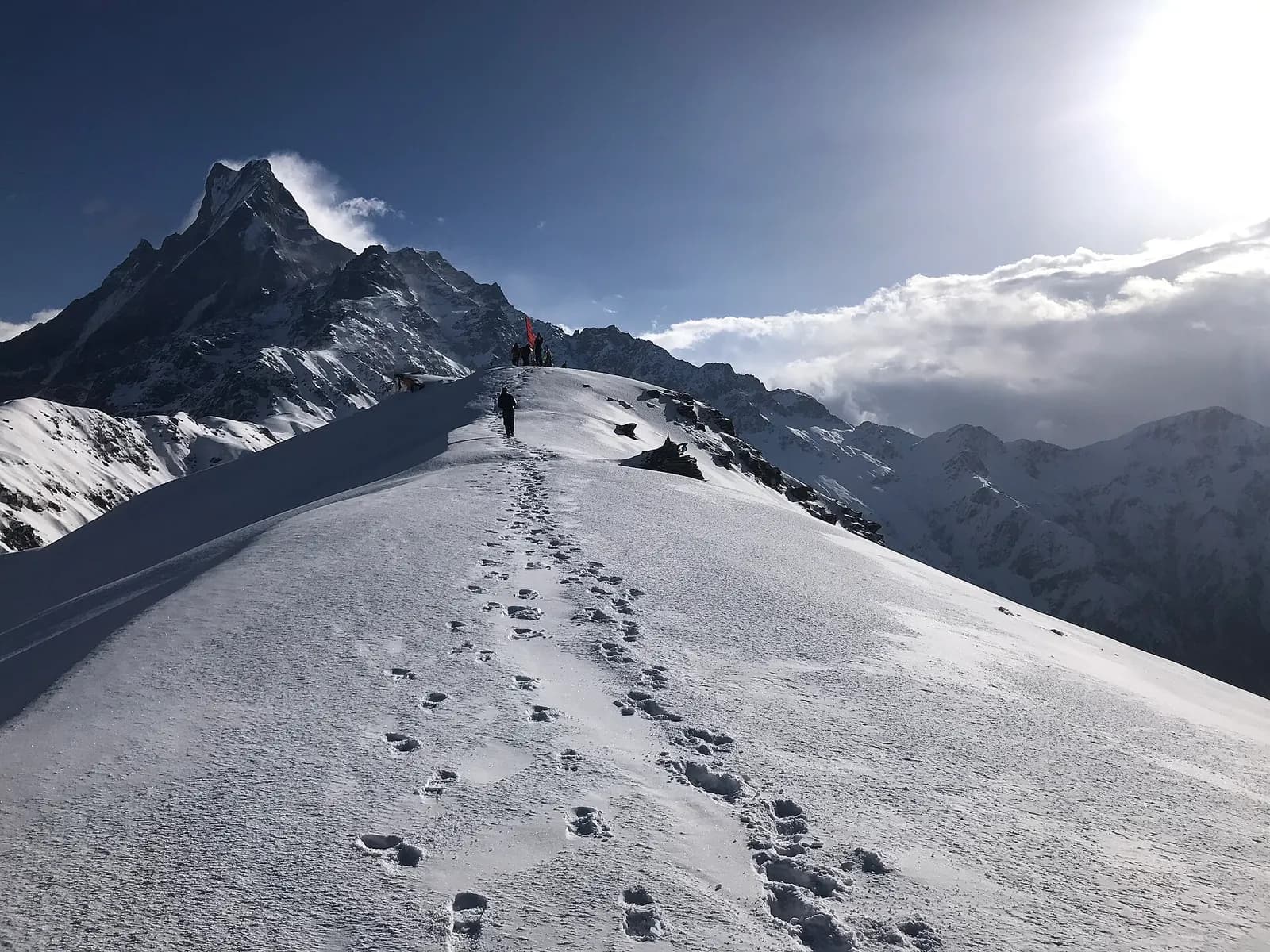
Day 4 is the big one. You leave High Camp around 4 am with a headlamp and climb for about 2 hours to the Upper Viewpoint. On a clear morning you watch the sun light up Machhapuchhre, Annapurna South and Hiunchuli. Continuing to Mardi Himal Base Camp (4,500 m) adds another 2 to 3 hours return and is only worth it with good weather and fresh legs.
How hard is it?
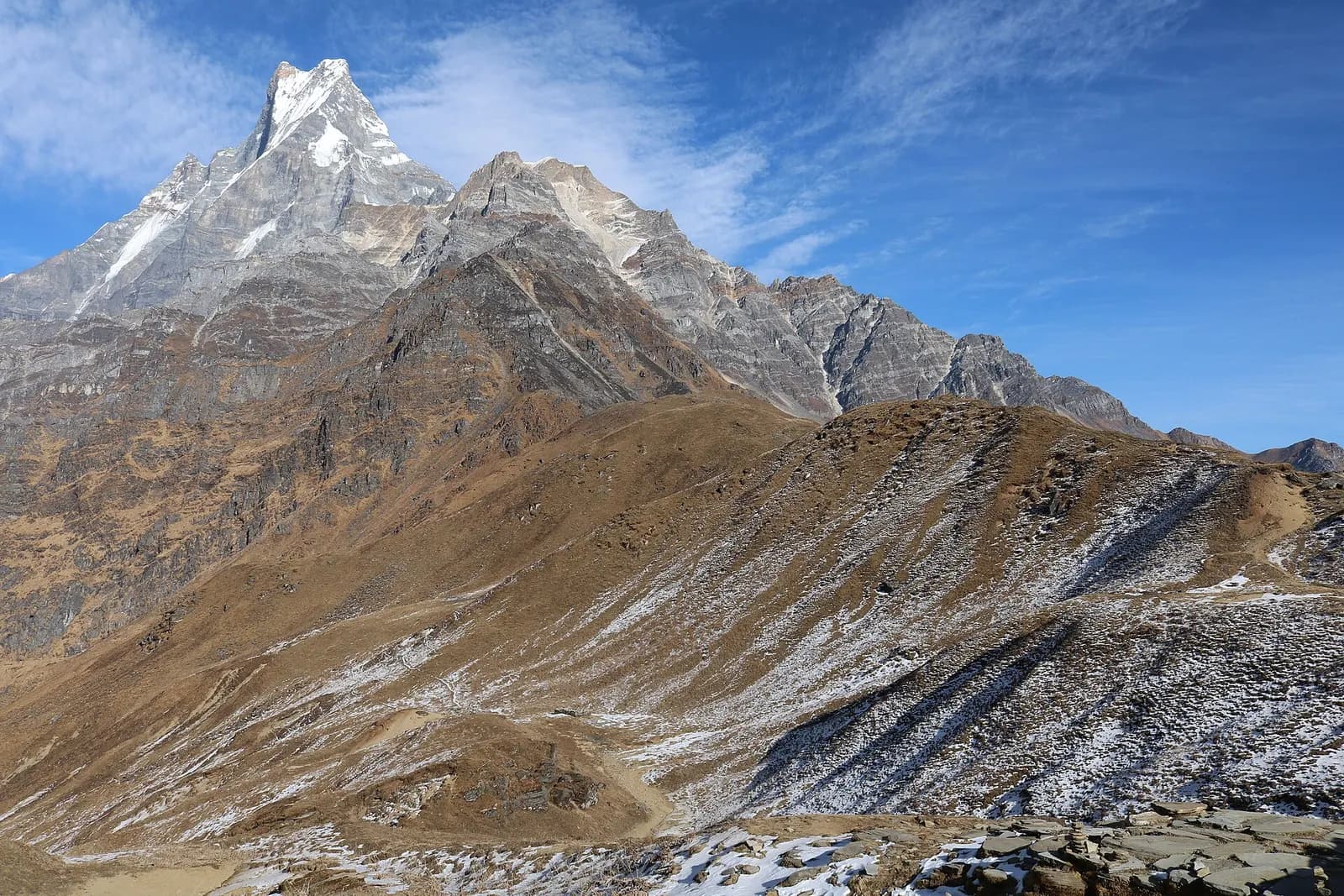
Most days are 5 to 7 hours of walking with steady climbs. There are no technical sections, but the final push above High Camp is steep and starts in the dark, so broken-in boots and a headlamp matter more than fitness alone.
The ridge above Low Camp is exposed, and the trail to the viewpoint can be icy from December to February. In bad weather your guide may turn back early, which is why a spare day in Pokhara is worth having.
Altitude is a smaller factor than on longer treks, because you only spend one night above 3,000 m. Still, walk slowly above High Camp and tell your guide if you get a headache.
Permits
You need an ACAP permit (NPR 3,000 for foreign nationals, NPR 1,000 for SAARC nationals) and a TIMS card. Foreign trekkers also need a licensed guide. Our Nepal trekking permits guide explains the rules in full, and most Mardi Himal packages include both permits.
Teahouses and food
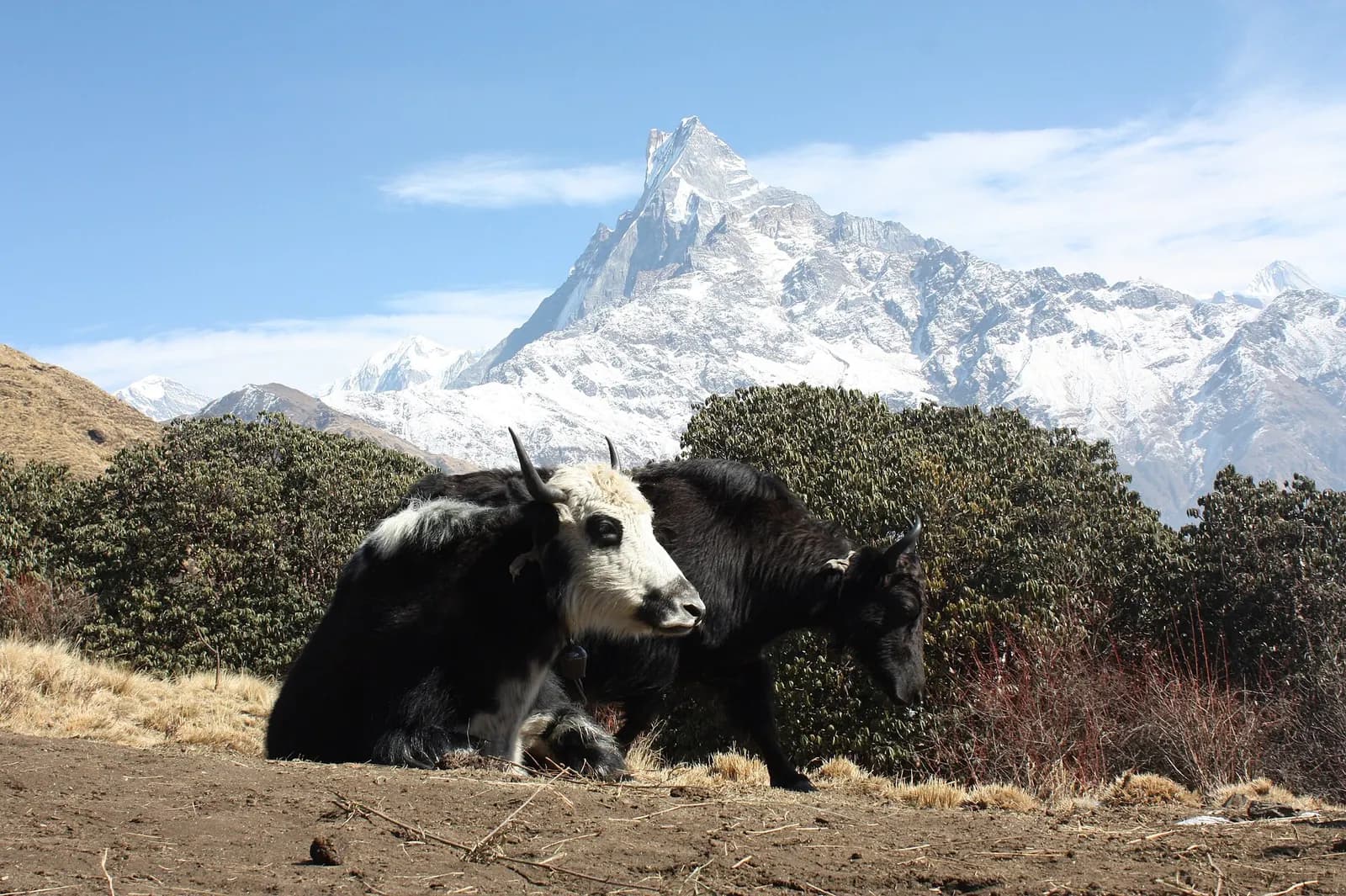
Family-run teahouses line the route, with twin rooms and shared bathrooms. Dal bhat is the standard dinner and refills are free. Prices rise the higher you go, since everything is carried up on foot.
Teahouses at Low Camp and High Camp are small, so in October and November rooms fill fast. Booking through an operator who reserves rooms ahead saves you from sharing a dining-room floor.
Best time to trek Mardi Himal
- October to November: the clearest skies and the best views. The busiest time.
- March to May: warmer days and rhododendrons in flower on the lower ridge, with more cloud in the afternoons.
- December to February: cold, quiet and often very clear, but snow can block the trail above High Camp.
- June to September: monsoon rain, leeches in the forest and the mountains mostly hidden by cloud.
What to pack
- Broken-in hiking boots and a pair of camp shoes
- Down jacket, fleece and a waterproof shell
- Warm hat, gloves and a buff for the pre-dawn climb
- Headlamp with spare batteries
- Sleeping bag rated to around -5 to -10 °C
- Trekking poles for the steep descent to Siding
- Sunglasses and sunscreen
- Water bottle and purification tablets
Getting to Pokhara
Pokhara is 6 to 8 hours from Kathmandu by tourist bus or a 25-minute flight. Most operators include the jeep from Pokhara to the trailhead and back. Read Kathmandu to Pokhara: bus, private jeep or flight? to choose how to get there, and things to do in Pokhara to plan your days before and after the trek.
Frequently asked questions
Do I need a guide for Mardi Himal?
Yes. Since April 2023, foreign trekkers in Nepal’s national parks and conservation areas must walk with a licensed guide. Mardi Himal is inside the Annapurna Conservation Area.
Which permits do I need?
An ACAP permit and a TIMS card. Operators usually arrange both before you start, so check that they are listed under Included.
How many days is the Mardi Himal trek?
Most people take 5 days from Pokhara. Fit trekkers can do it in 4 by walking from Low Camp to High Camp in one long day, and a 6-day itinerary adds a night at Badal Danda for a gentler climb.
Is Mardi Himal harder than Poon Hill?
Yes. Mardi Himal climbs to 4,500 m, compared with 3,210 m at Poon Hill, and the climb from High Camp to the viewpoint is steep. It is still a good second trek, or a first trek for fit walkers.
Mardi Himal or Annapurna Base Camp?
Choose Mardi Himal if you have 4 to 6 days or prefer quieter trails. Choose Annapurna Base Camp if you have 7 days or more and want to stand inside the ring of peaks of the Annapurna Sanctuary.
Pasang has guided in the Everest and Annapurna regions for 14 years and trains new guides for Himalayan Footprints Treks.